
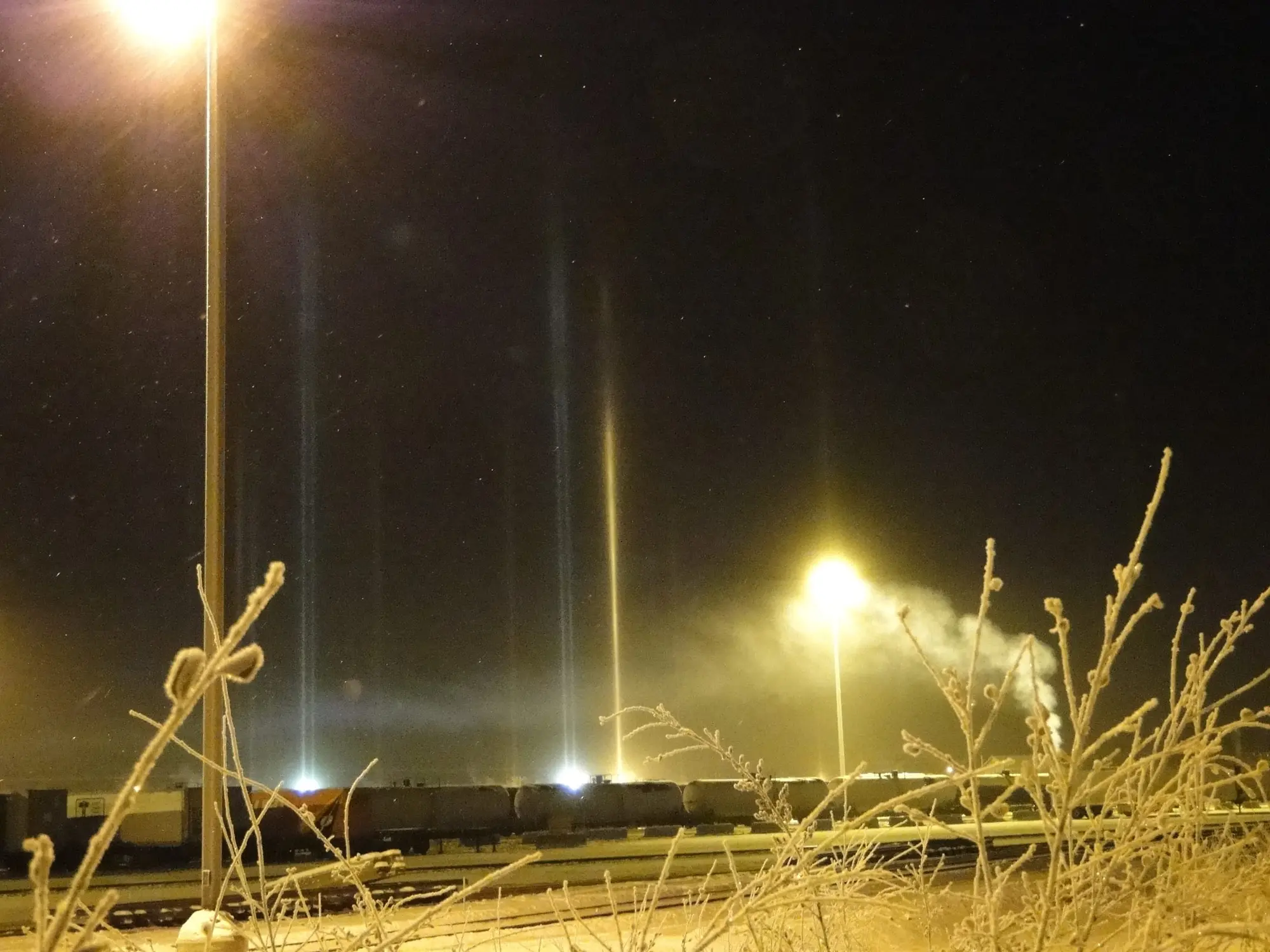

This page is for everyone going to Fairbanks between November and March, and above all for anyone spending a night out after the aurora, which is spent standing still in the cold and which no one can promise. January’s normal low at Fairbanks International Airport is -17.2°F, with a low at or below 0°F on 25.7 days of the month. Dress in three layers, no cotton against the skin and a down or synthetic parka on top, with insulated boots, mittens and a covered face. If you will not buy a parka for one trip, Alaska Outdoor Gear Rental’s Fairbanks store rents the parka, snow pants, boots and gloves on Viator, at $65 an adult for its extreme-cold package or $45 an adult for a package it rates to -20°F. Many winter tours lend their own gear, and the list near the end says which.
Prices, ratings and what each trip lends are as Viator and FareHarbor listed them on 23 November 2026. The cold is NOAA’s and the National Weather Service’s, and the layers follow the guide to dressing for a Fairbanks winter that UAF Outdoor Adventures wrote for the University of Alaska Fairbanks’ international student handbook, which the university’s Geophysical Institute gives aurora hunters beside its forecast with the words “If you are aurora hunting at cold temperatures, please be prepared!”
How cold a Fairbanks winter gets
These are NOAA’s 1991–2020 normals at Fairbanks International Airport. A normal low is an average: many nights of the month run colder.
| Month | Normal high | Normal low | Days with a low at or below 0°F | Days with a high at or below 32°F | Days with 1 inch of snow or more on the ground |
|---|---|---|---|---|---|
| October | 34.1°F | 18.4°F | 2.8 | 14.2 | 15.2 |
| November | 12.3°F | -4.1°F | 18.2 | 27.9 | 29.3 |
| December | 4.3°F | -13.0°F | 25.6 | 30.1 | 31.0 |
| January | 0.6°F | -17.2°F | 25.7 | 29.8 | 31.0 |
| February | 11.6°F | -11.2°F | 21.2 | 26.1 | 28.5 |
| March | 24.9°F | -3.4°F | 18.2 | 21.3 | 31.0 |
| April | 45.6°F | 21.7°F | 2.0 | 4.2 | 21.9 |
The records go much lower. On NWS Fairbanks’s daily record sheets, kept since 1904, every date from 1 December to 28 February has a record low of -46°F or colder. The coldest of those three months’ records is -66°F, on 14 January 1934; December’s is -62°F, on 28 and 29 December 1961; February’s is -58°F, on 2 February 1993 and on 3 February 1947. The sheets were last updated in May 2016, so a record set since then is not on them, and the office calls its records preliminary. For the whole year, month by month, with the daylight, see Fairbanks weather and daylight by month.
Wind makes it worse. By the National Weather Service’s example, 0°F with a 15 mph wind is a wind chill of -19°F, at which exposed skin can freeze in 30 minutes, and by the Weather Service’s own formula -20°F with a 10 mph wind is a wind chill of about -41°F. The Weather Service’s wind chill was tested on adults, and it says to be even more cautious with children.
Three layers, and no cotton
UAF Outdoor Adventures builds a Fairbanks winter outfit in three layers, and the reason is moisture: the more active you are, the less clothing you need and the more sweat you make, and the CDC warns that hypothermia can set in even above 40°F when a person is wet from sweat and chilled.
- Base layer. Polypropylene, polyester or merino wool against the skin, to move moisture outward. Never cotton, which absorbs moisture and holds it against the skin.
- Mid-layer. The same materials, to add warmth over a thin base layer and keep moisture moving outward.
- Outer layer, standing still. For the less active hours, an aurora night among them, and for around town at -40°F, a very warm insulated parka, the kind sold as a puffy coat. Down works well in the cold, dry air of Interior Alaska and is light; a synthetic parka is a bit bulkier and heavier to pack, but more reliably warm if it gets really wet.
- Outer layer, moving. For cross-country skiing or snowshoeing, a softshell jacket and pants, which block the wind but breathe. A truly waterproof shell is not needed for most winter uses in Fairbanks, and many breathable membranes, Gore-Tex among them, freeze in the winter and let no moisture through, so the inside of the shell coats with water and ice.
The CDC’s list for going out in extreme cold is the same idea: several layers of loose-fitting clothing, a water-resistant coat and boots, a hat, mittens or gloves, and a scarf or knit mask over the face and mouth.
Hands, feet and face
These are the hardest places to keep warm, and where frostbite strikes most often: the CDC names the nose, ears, cheeks, chin, fingers and toes.
- Hands. Mittens are warmer than gloves. If your hands get cold in gloves, switch to mittens.
- Feet. UAF Outdoor Adventures names mukluks, Uggs, bunny boots (military-surplus vapor-barrier boots), Sorels and Baffins as the common choices, worn with merino wool or synthetic-blend socks, and how active you will be decides between them. Both rental packages below include boots.
- Head and face. A hat of fleece, acrylic or wool, and for extreme cold a balaclava, buff, neoprene face mask, nose hat, goggles or neck gaiter over the exposed skin of the face and ears.
Frostbite is easy to miss. By the CDC, redness or pain in any patch of skin may be the first sign, then skin that turns white or grayish-yellow and feels unusually firm or waxy, and numbness; because the frozen part is numb, a person often does not know until someone else points it out. So check each other’s cheeks and noses. If you see it, get indoors, seek medical care, and do not rub the skin or warm it with a heating pad, a stove or a fireplace.
Standing still on an aurora night
An aurora night is hard on clothing: you are out after dark, near the night’s low, and you are not moving. Greatland Adventures tells its own guests: “Aurora viewing is not an active pastime. You’ll be standing outside looking at the sky, at night.” Dress for the night’s low and wear every layer.
The aurora chases leave the clothing to you. None of the twelve on our northern lights tours page lists winter clothing among what it includes, and Face The Outdoors lists cold-weather gear among what it does not. On the viewing lodges and cabins page, Alaska Wild Lights says it has no cold-weather gear to rent. Some aurora nights do include it: Chena Hot Springs Resort’s aurora viewing tour, with its warm yurt at the top of Charlie Dome (our Chena Hot Springs tours page), and Fairbanks Snow Sleighers’ aurora night by snowmobile (the list below).
For a night out from December to February, rent the extreme-cold kit below if you have no parka of your own: the store sells it as its package for extreme cold, and every date from 1 December to 28 February has gone to -46°F or colder at some time since 1904. To time the trip, the best time to see the northern lights sets out the season.
What fails in the cold: phones and batteries
Phones quit in the cold. Google warns that a Pixel phone whose temperature falls below 32°F may shut down suddenly, and that it should warm up gradually; the National Park Service warns that electronics and batteries drain faster in the cold. Wind does not make a phone colder than the air, the Weather Service explains, but an object left out cools to the air temperature faster in a wind. In January the air at Fairbanks International Airport stays at or below 32°F all day on 29.8 days on average, so a phone in an outside pocket or a hand on a -20°F night cools toward -20°F.
So carry the phone, and any spare batteries, in an inside pocket against your body, and take it out for a photo and put it back.
Renting the parka: two packages in Fairbanks
Alaska Outdoor Gear Rental’s Fairbanks store sells two clothing packages on Viator. Each is a parka, snow pants or bibs, winter boots and gloves, picked up at the store at 1855 Standard Avenue, about 3 miles from downtown and about 5 miles from the airport terminal by road. Neither is a tour or a ride, and the store does not come to you. Viator’s prices are what the listings charge.
| Package | Adult | Youth | Child | Rental | Rating |
|---|---|---|---|---|---|
| Extreme-cold package: parka, snow pants or bibs, boots, gloves | $65 from 13 | $60 from 8 to 12 | $50 under 8 | 24 hours | 5.0 from 22 reviews |
| Package rated by the store to -20°F: parka, snow pants, boots, gloves | $45 from 15 | $40 from 10 to 14 | $35 from 2 to 9; $30 under 2 | That day and overnight, back the next business day | 4.9 from 14 reviews |
Prices are per person. Both cancel free up to 24 hours before, and the store does not cancel for weather or for too few travelers. A booking takes 1 to 15 people.
Rent the extreme-cold kit for nights out from December to February, and for anyone who feels the cold. It is the store’s package for extreme cold, $20 more for an adult, and it comes in sizes from small and youth to 5XL, with a fur ruff or without, and bibs or pants; the store contacts you after you book to settle sizes and styles, and offers pickups and returns late at night or early in the morning. For more than a day, you select more dates.
Rent the cold-rated kit for March, for daytime trips, or to spend less. The store rates it to -20°F, rents it from the morning for that calendar day, and has you keep it overnight and bring it back the next business day: book a Monday, and it is due back Tuesday morning. It comes from small to 5XL, plus sizes included, with long or short snow pants, boots to men’s size 17 and a private fitting, and the store adds its own notes on where to look for the aurora. Book more days for a longer trip.
Neither lists base layers or socks: those are yours, as above.
Which tours lend winter gear
Many winter trips around Fairbanks lend outerwear. This is what each one’s listing says it lends, read on 23 November 2026; each is compared on the page linked beside it.
| Trip | Compared on | What it lends, by its listing |
|---|---|---|
| Rods Alaskan Guide Service, dog sled ride in North Pole | Dog sledding | Jacket, bibs, boots, gloves and a neck gaiter or scarf |
| Last Frontier Mushing Co-op, private run on the Yukon Quest trail | Dog sledding | Parka, bibs, boots, mitts and hats; no goggles, which it recommends if you wear glasses rather than contacts |
| Sluice Box Sled Dogs | Dog sledding | Extra winter gear as needed, and extra arctic-rated boots, warmed, for which it asks each guest’s boot size |
| Trail Breaker Kennel, sled dog sampler | Dog sledding | Extra winter gear as needed, though it asks you to come properly dressed |
| Bill Cotter Kennel, in Nenana | Dog sledding | Warm gear, at no extra cost |
| Howling Bay Kennel, dog sled ride | Dog sledding | Outfits you in gear when you arrive |
| Rods Alaskan Guide Service, snowmobile hour, one or two to a machine | Snowmobiles | Snow jacket, snow bibs, boots, gloves, neck gaiter and a heated helmet |
| Fairbanks Snow Sleighers, two-hour ride and Lynx Loop | Snowmobiles | Snow boots, snow bibs, mittens, balaclava, helmet and goggles: no parka or jacket |
| Fairbanks Snow Sleighers, aurora night | Snowmobiles | Winter gear and clothing |
| Midnight Sun Golf Course, snowmobile hour | Snowmobiles | Snowsuit, snow boots, gloves, helmet and goggles |
| Chena Hot Springs Resort, electric snowmobiles | Snowmobiles | Parka, snow pants and bunny boots, if you need them |
| Chena Hot Springs Resort, aurora viewing tour | Chena Hot Springs tours | Warm gear, if you need it |
| Chena Hot Springs Resort, Aurora Ice Museum | Chena Hot Springs tours | A parka for inside the museum, free |
| Basecamp Adventures, the dog sled and snowmobile days with reindeer | Winter things to do | Snow gear |
These lend no winter clothing, by their listings, so dress for them or rent:
- Alaska Wild Lights’ snowmobile tour, on the snowmobile page, and its dog mushing, on the dog sledding page, list clothing and cold-weather gear among what they do not include, and its aurora viewing lodge, on the lodges page, has no cold-weather gear to rent.
- VIP Northern Lights Tours’ Castner Glacier ice cave day, on our winter things to do page, lends snowshoes and hiking poles but not winter boots, jackets, winter pants, gloves or hats.
- Midnight Sky Adventures’ Arctic Circle and northern lights tour on the Dalton Highway, on our Arctic Circle tours page, lists winter clothing and cold-weather gear among what it does not include.
- Five more sled rides on the dog sledding page, Alaska Journey Tours’, 1st Alaska Outdoor School’s, Douglas Fir Mushing’s, Chena Hot Springs Resort’s and Trail Breaker Kennel’s four-mile ride, list no winter gear they lend. The resort’s asks you to bring a warm hat, gloves and a jacket or coat, and the four-mile ride a warm jacket, a hat, a scarf, mittens and warm footwear, with snow pants recommended.
Your base layers, socks and anything warm for the ride there and back are still yours. If you drive yourself to a kennel or a lodge, our car and winter driving page covers the roads.


